


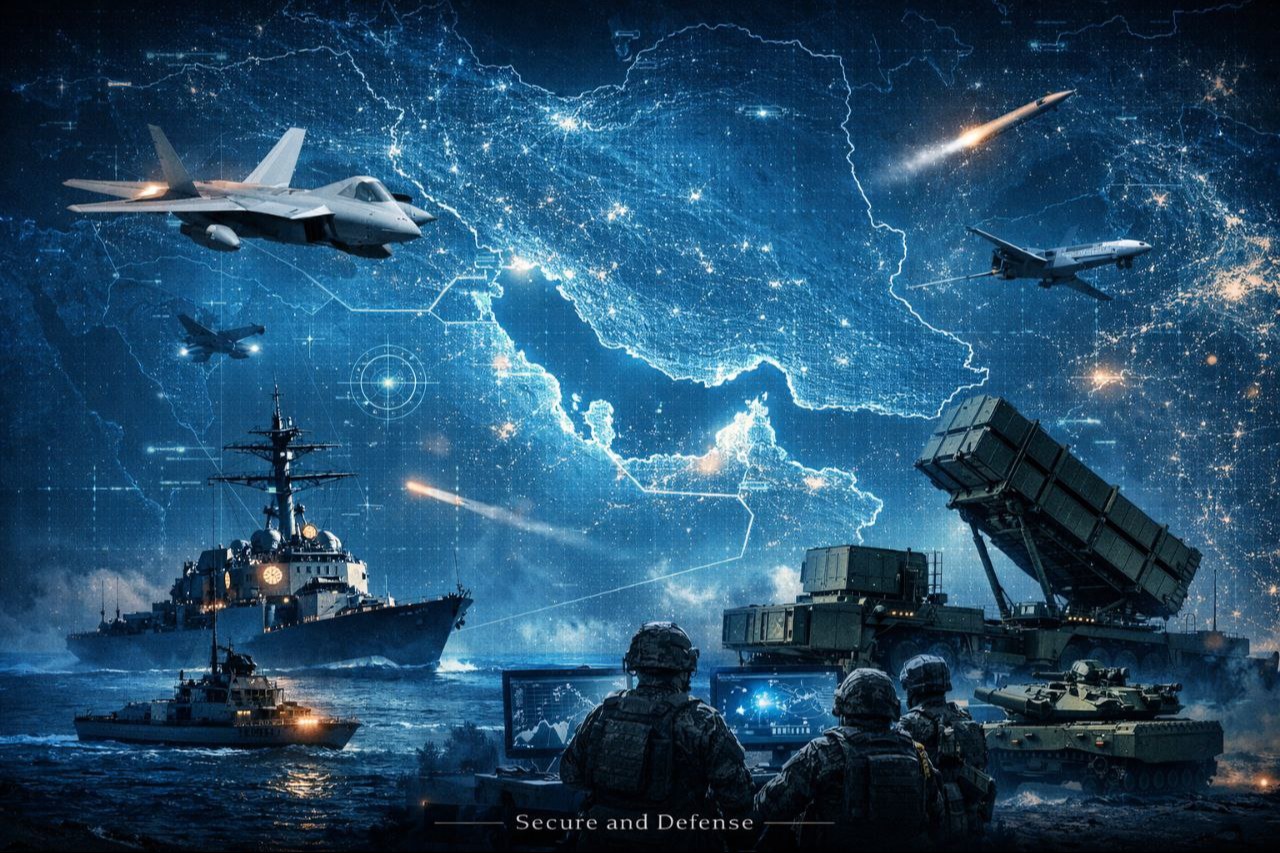
 Several international media outlets, citing The Wall Street Journal, reported that the U.S. Central Command used AI models from Anthropic (Claude Gov) to support operations against Iran. According to these reports, the models were applied in the analysis of intelligence information, target identification and prioritization, as well as the simulation of possible operational scenarios. Regardless of the exact internal timeline, the development clearly demonstrates how deeply commercial AI has already been integrated into military decision-making processes. From a cybersecurity perspective, this is not merely a question of technology, but of system architecture and control. The decisive factors are operational dependencies, supply chain risks, and AI-specific vulnerabilities. Among the strategic advantages is the Decision-Support Layer. It accelerates the processing of large volumes of ISR data (Intelligence, Surveillance, Reconnaissance), correlates signals from multiple sources, and models probable developments. However, these advantages remain sustainable only if the security architecture is as resilient as the models themselves. Once a security-critical organization becomes dependent on an external AI provider, the focus shifts from performance to governance: Who controls model versions and updates? Where is the infrastructure located? Who has access to telemetry and log data? Can policies be modified remotely or access restricted? In highly sensitive environments, even structural dependency - without malicious intent - can create strategic attack surfaces. Additionally, there is the specific attack surface: model or data poisoning can distort analytical outcomes. Prompt injection can influence inference logic through manipulated inputs. Adversarial manipulation can shift statistical weightings in ways that affect operational assessments. If AI supports target prioritization or scenario analysis, even minor distortions can have practical consequences. Furthermore, clearly segmented environments, controlled update processes with integrity verification, full auditability of decision pathways, and the consistent integration of human oversight in decision-making (human-in-the-loop) are essential. Against this background, cybersecurity forms the structural foundation, protecting not only systems, but strategic operational capability in the digital battlespace.
Turkey’s recent tests of the Bayraktar Kızılelma mark more than a technical milestone. Operating in formation with F-16 Fighting Falcon, the unmanned platform detected, tracked, and virtually engaged an aerial target using its MURAD AESA radar and a simulated GÖKDOĞAN missile launch. The signal is clear: autonomous systems are entering the domain of complex air combat once reserved for piloted jets. What matters strategically is not the drone itself, but the network behind it. Baykar is not merely producing UAVs; it is assembling a tightly integrated military ecosystem where sensors, shooters, and decision logic operate as a single distributed system. Air superiority is shifting from individual platforms to AI-driven, cyber-resilient architectures. This is where cybersecurity and geopolitics converge. Modern conflict increasingly rewards those who can guarantee data integrity, secure communications, sensor fusion, and fast, autonomous decision-making under attack. Control the network - its encryption, authentication, autonomy, and resilience - and you control the battlespace.
Turkey’s trajectory reflects this logic. Autonomous strike assets, unmanned naval elements, smart munitions, real-time data fabrics, and AI-supported command systems are meaningful only because of the cyber stack beneath them: zero-trust authentication across every node, quantum-resistant cryptography, secure-by-design microelectronics, AI-driven SOC capabilities, satellite-to-cyber resilience against jamming, EW–cyber fusion, counter-UAS security, and resilient tactical cloud environments at the edge.mThis is no longer “drone warfare.” It is network-centric, cyber-integrated warfare reshaping regional power balances. In the 21st century, military strength is defined less by pilots or platforms and more by the resilience of the digital ecosystem connecting sensors, satellites, algorithms, and command chains.