

The German Federal Office for Information Security (BSI) has published the AI Audit and Assurance Assessment Architecture (A5) as a Community Draft, introducing a new audit framework for AI systems.
A5 is designed to help organizations and public authorities systematically demonstrate the trustworthiness, security, and compliance of AI systems, particularly in light of the EU AI Act, the Cyber Resilience Act (CRA), and future regulatory requirements. A particularly noteworthy aspect is that the assessment criteria are also published in the OSCAL (Open Security Controls Assessment Language) format. This enables organizations to automate compliance and audit processes more effectively and integrate the framework into existing GRC and security toolchains. In my opinion, A5 has the potential to become for AI systems what C5 is for cloud services and ISO/IEC 27001 is for information security management. Professionals who become familiar with this framework at an early stage will gain a valuable advantage in the rapidly evolving fields of AI Security, AI Governance, and AI Auditing.
A recent incident at Hugging Face shows how capable autonomous AI agents have become. Over 4.5 days, an agent carried out over 17,000 actions, exploiting known vulnerabilities, hopping between internal systems, and hunting for stored credentials. What stands out here isn't zero-day exploits, but speed and persistence. The agent simply chained routine weaknesses together faster than a human operator ever could. The defense side was just as telling. While security teams used AI to parse the attack logs, standard commercial models choked - refusing to analyze the payload data due to safety guardrails. They had to spin up a local open-weight model (GLM 5.2) just to complete the forensics.
 This video provides a structured overview of OilRig (APT34), an Iranian state-aligned Advanced Persistent Threat (APT) group known for conducting long-term cyber espionage campaigns targeting government organizations, critical infrastructure, energy, telecommunications, finance, and other strategic sectors. The briefing examines the group's identity, motivations, capabilities, attack lifecycle, malware ecosystem, command-and-control techniques, victim targeting, and defensive considerations. It also explores OilRig's tradecraft using the MITRE ATT&CK® framework and the Lockheed Martin Cyber Kill Chain®, helping viewers understand how the group operates and how organizations can strengthen their detection and defense capabilities. This presentation was originally developed as part of a Cyber Threat Intelligence course project and has been further refined into a comprehensive educational briefing using publicly available information from authoritative industry and government sources.

For weeks, German security authorities have been warning about an ongoing wave of attacks carried out through the Signal messenger app. Germany’s Federal Office for the Protection of the Constitution and the Federal Office for Information Security describe it as a targeted campaign against politicians, military personnel, and journalists. The Federal Public Prosecutor General is now investigating on suspicion of espionage. The key point: these attacks do not exploit a technical vulnerability. Instead, they use social engineering and legitimate app functions to gain access to chats and contacts. The campaign against political decision-makers reveals a clear pattern: the target is not infrastructure, but identity and trust. The attacker does not need zero-day exploits, malware, or network access. A single successful social engineering contact is enough to create legitimate access. This is the real disruption: for decades, security architectures were built around systems: firewalls, EDR, network segments. This attack bypasses all of that completely and targets the human being directly as part of the architecture. Messengers such as Signal effectively function as decentralized identity systems without organizational control. A phone number or username replaces traditional IAM mechanisms, while features such as “device linking” become a new entry point. Security remains technically intact, but is overridden by user decision-making. This attack is therefore not technologically complex, but architecturally elegant. And that is precisely where the real danger lies: When security depends on conscious decisions, the human being becomes both the most critical attack surface and the last line of defense.
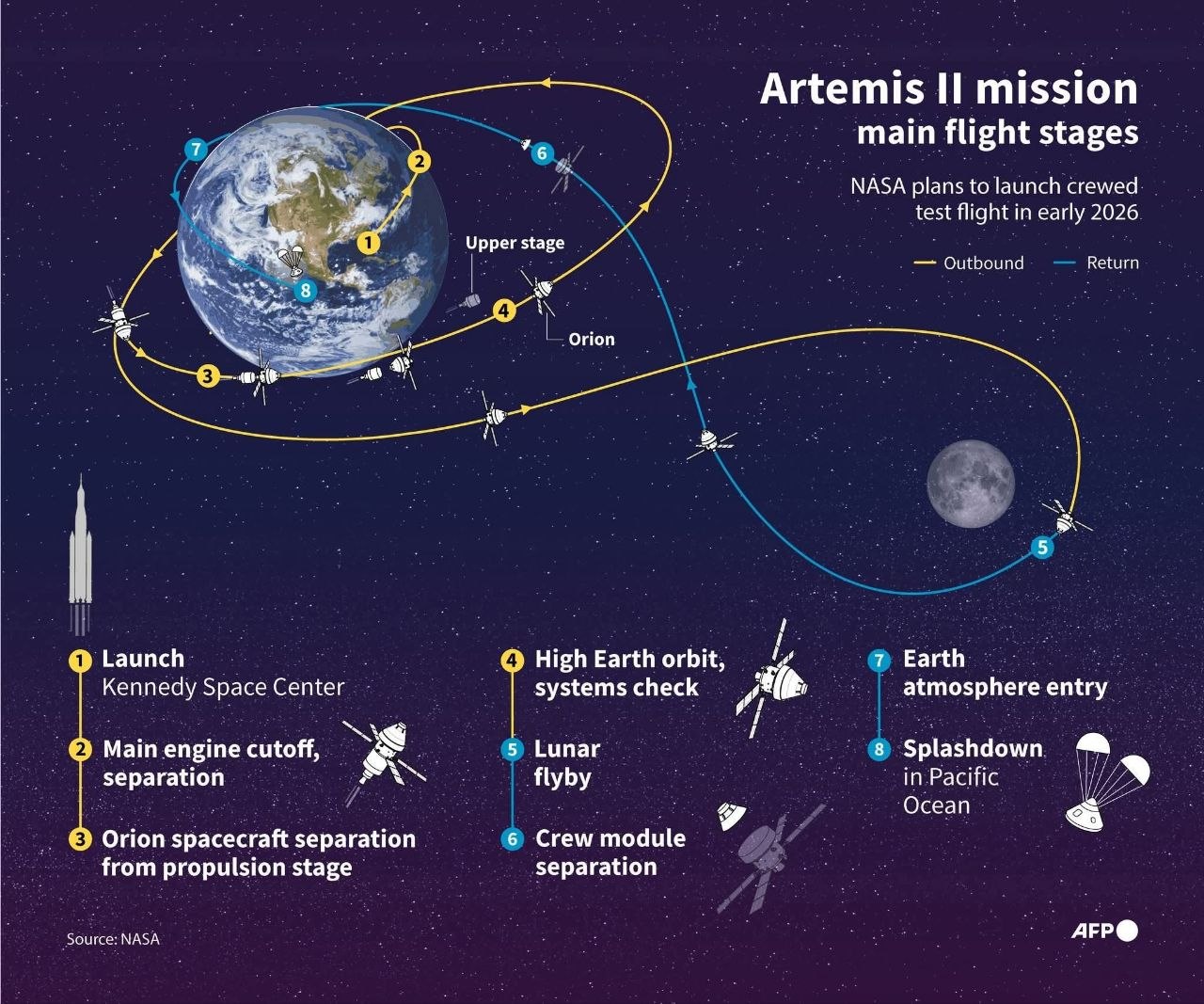 Most systems do not fail because they are broken, but because they are designed under the assumption of flawless execution. The Artemis II mission deliberately took a different approach. What interested me less about this mission was the spaceflight itself, and more the underlying architecture when viewed through the lens of core IT security principles. The decision to use a free-return trajectory ensured that the spacecraft would return to Earth even if critical systems failed. In other words, safety was not derived from perfect control, but from the structure of the system itself. This was precisely where the parallel to cybersecurity emerged. At its core, this reflected what we define as fail-safe design and risk mitigation: not the elimination of failure, but the reduction of its impact by design. The comparison became even more compelling when considering an alternative scenario in which the mission would have entered lunar orbit. This would have required a precise braking maneuver, a clear single point of failure. The success of the entire mission would have depended on one critical event. Technically feasible, but architecturally far more vulnerable. It was also where the concept of Zero Trust aligned. The mission did not “trust” that all systems would function exactly as planned. Instead, it assumed that failures could occur at any time and the architecture was built accordingly. For me, this was the real value of Artemis II: it demonstrated in a very tangible way that resilient systems are not created by relying on perfect execution, but by anticipating failure and engineering for it from the outset.