
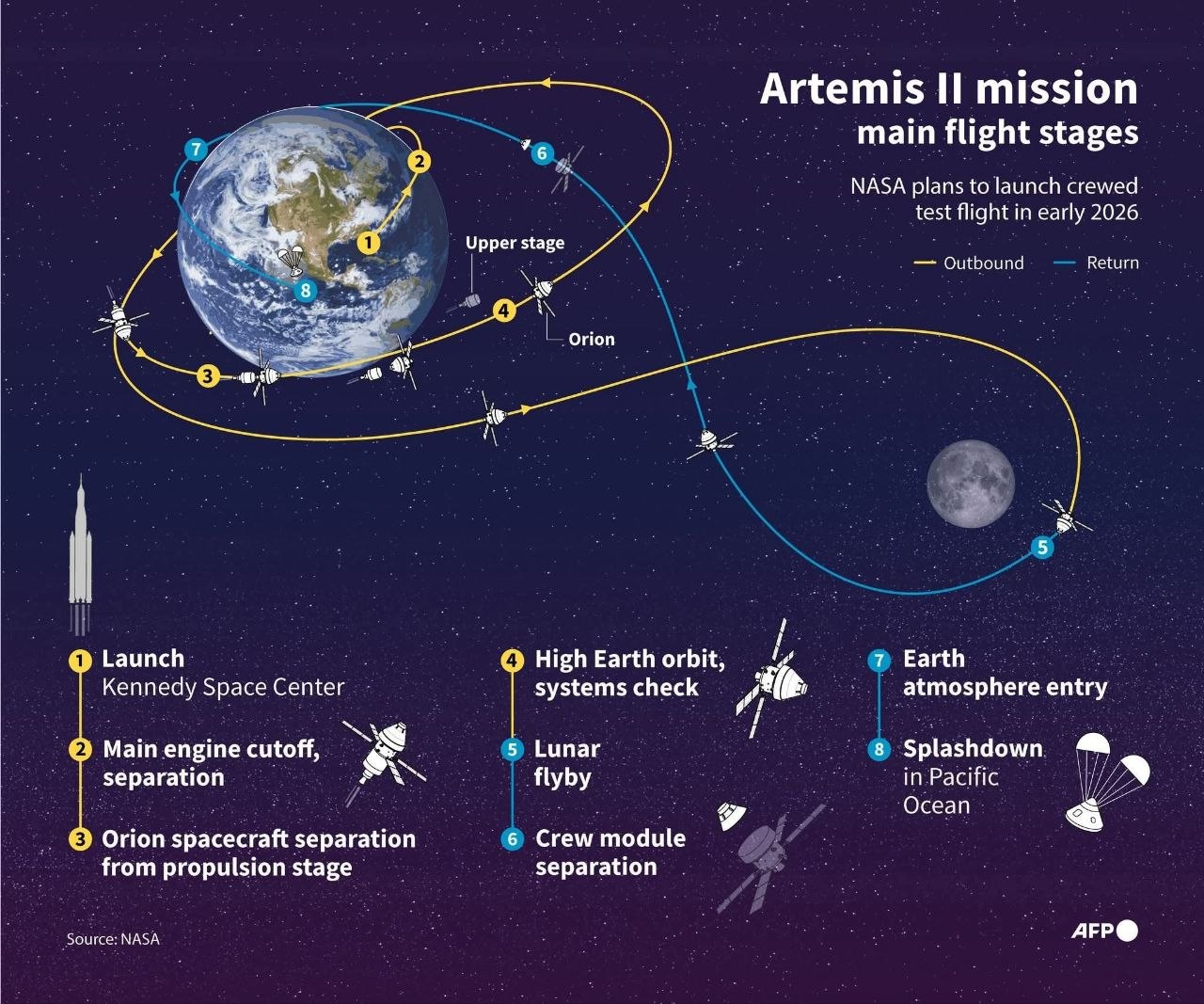
 Most systems do not fail because they are broken, but because they are designed under the assumption of flawless execution. The Artemis II mission deliberately took a different approach. What interested me less about this mission was the spaceflight itself, and more the underlying architecture when viewed through the lens of core IT security principles. The decision to use a free-return trajectory ensured that the spacecraft would return to Earth even if critical systems failed. In other words, safety was not derived from perfect control, but from the structure of the system itself. This was precisely where the parallel to cybersecurity emerged. At its core, this reflected what we define as fail-safe design and risk mitigation: not the elimination of failure, but the reduction of its impact by design. The comparison became even more compelling when considering an alternative scenario in which the mission would have entered lunar orbit. This would have required a precise braking maneuver, a clear single point of failure. The success of the entire mission would have depended on one critical event. Technically feasible, but architecturally far more vulnerable. It was also where the concept of Zero Trust aligned. The mission did not “trust” that all systems would function exactly as planned. Instead, it assumed that failures could occur at any time and the architecture was built accordingly.
For me, this was the real value of Artemis II: it demonstrated in a very tangible way that resilient systems are not created by relying on perfect execution, but by anticipating failure and engineering for it from the outset.